Babs Help 2 Sleep - $47 - Instant Access - Self-Paced
Independent Naps & Early Mornings
Longer naps. Later mornings. The same method that worked at night, now for the day.
You know exactly what the day looks like.
Nights are good now. She self-settles at bedtime, she connects her sleep cycles, she’s done the thing you thought she wouldn’t do.
And then the sun comes up and none of it applies.
You put her down for the first nap. Forty minutes later she’s awake. One sleep cycle and that’s it. She’s upset, just tired and crying for you, and now the whole day is off.
So you start rescuing. The stroller. A drive around the block. The long contact nap on you where you can’t move and can’t put her down and can’t get anything done.
You’ve tried feeding before the nap, stretching the wake window, shortening the wake window. Nothing.
And every plan you make has a question mark on it, because you never know if the nap is going to hold.
“Please tell me we’re not the only ones.”
You’re not. That’s a real sentence from the group, and it’s the reason this exists.
Here’s what I want you to hear first. You already did the hard part. Your little one sleeping through the night is the proof. She can fall asleep on her own and connect her sleep cycles without you. You watched it happen.
Falling asleep on her own is one skill, and she already has it. She learned it in the dark. Naps are that same skill in the daylight, and they’re harder to learn for reasons that have nothing to do with you and nothing to do with her.
Here's what's actually going on.
A 40-minute nap is a night waking, just in daylight.
Think about what you fixed at night. Your little one used to surface between sleep cycles and call for the thing that put her to sleep, the rocking, the feeding, you. She learned to link those cycles on her own instead. That’s the skill.
In the day she hasn’t learned it yet. So whatever gets her to sleep for a nap, the motion, the car, your arms, is gone when she surfaces after the first cycle. There’s nothing there to carry her into the next one. So she’s awake, forthy minutes in, before she’s rested.
That’s why the tweaks haven’t worked. A different wake window, an earlier nap, a later nap, none of it touches the real issue, which is that she still needs a condition to fall asleep in the day and hasn’t had the chance to do it on her own.
The other half is timing. Put her down too early and she doesn’t have enough sleep pressure, so it takes longer, with more protesting. Put her down too late and she’s overtired, and overtired is harder to settle than anything. The sweet spot is when she’s been awake long enough and is just starting to wind down, before she’s gone past it.
“Naps are messy, just like any new skill. It takes time and practice.”
Once you can read where she is, and you take that same skill into the day, naps start to settle. Not in one perfect afternoon. In small steps you’ll learn to spot.
The Method.
This is the answer to both things at once. Your little one sleeping through the night. You staying close while they learn how.
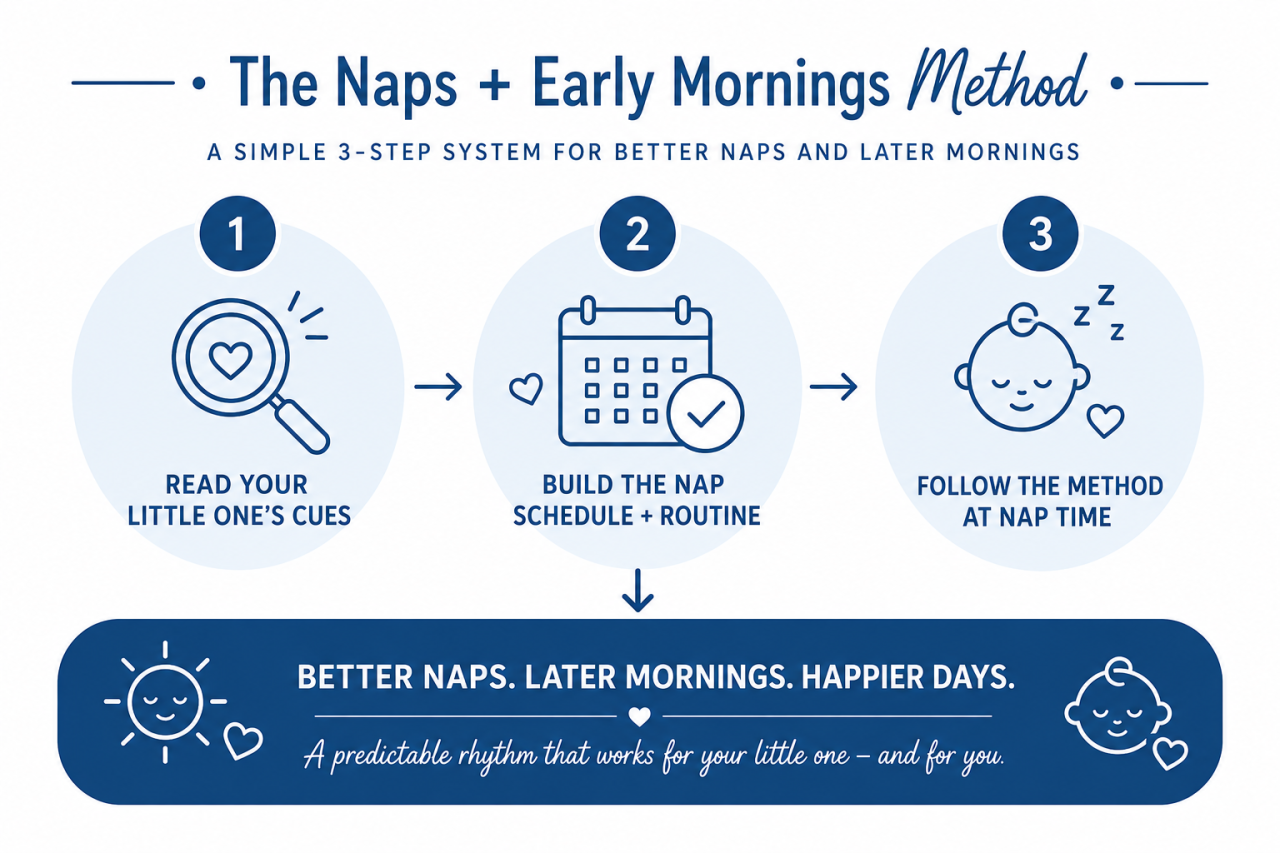
Three steps. In this order. Every time.
Step 1
Read Your Little One’s Cues
Timing is everything, so this is where it starts. You’ll learn to tell overtired from undertired, read the stages of fatigue, and catch the window when she’s ready to sleep but not past it.
Get this right and naps get dramatically easier. Get it wrong and the best method in the world still fights you.
Step 2
Build the Nap Schedule and Routine
Find your little one’s age in the ideal schedule and build her nap plan on paper. Then set the short nap routine, five to ten minutes, the same way every time, so her brain knows sleep is coming.
If she’s older or naps have been off for a while, this is where you move to a more set schedule that takes the guesswork out of the day.
Step 3
Follow the Method at Nap Time
Run the method in the day: settle her, comfort her when she needs it, and step back as she gets the hang of it, without ever leaving her to cry it out. You’ll know exactly what to do when the nap is short. You’ll learn the 45-minute try, the reset, the second try, and when to rescue a nap so it doesn’t wreck the next one. You’ll also learn how to coach her back through a short nap when she’s mid-cycle, the same way she learned to connect cycles at night.
Each step sets up the next one. You can’t skip the timing and jump to the method, the same way you couldn’t skip steps at night. That’s exactly why this works.
What about the messy days?
Naps take longer to settle than nights. I want to be honest about that. The first stretch is a bit of a rollercoaster, a good nap, then a short one, then two good ones. That’s not a sign it isn’t working. That’s what learning a new skill looks like in the day. And it’s a relearn, not a fresh start, she already owns the skill from nights, which is what makes it faster. It looks like rolling or walking did. Wobbly for a few days, and then one day it just happens without her thinking about it.
So don’t compare one nap to the next. Watch for the small wins instead: she settled a little faster, she woke a little later, she needed a little less support from you. Those are the signs it’s working, and they come before the long, predictable naps do.
Give it two to four weeks of staying consistent. The moms who watch for the small improvements hold steady and get there. The ones who expect it to be linear quit on a hard day. You now know which one to be.
What's inside.
3 short video modules
- Intro: How to use the course and your workbook, and why naps settle after nights.
- Tackling Naps: Why naps are different, reading your little one’s cues, building the nap schedule and routine, and the method at nap time, including what to do about short naps.
- Early Morning Wake Ups: The step-by-step fix for when naps are sorted but she’s still waking at 5am.
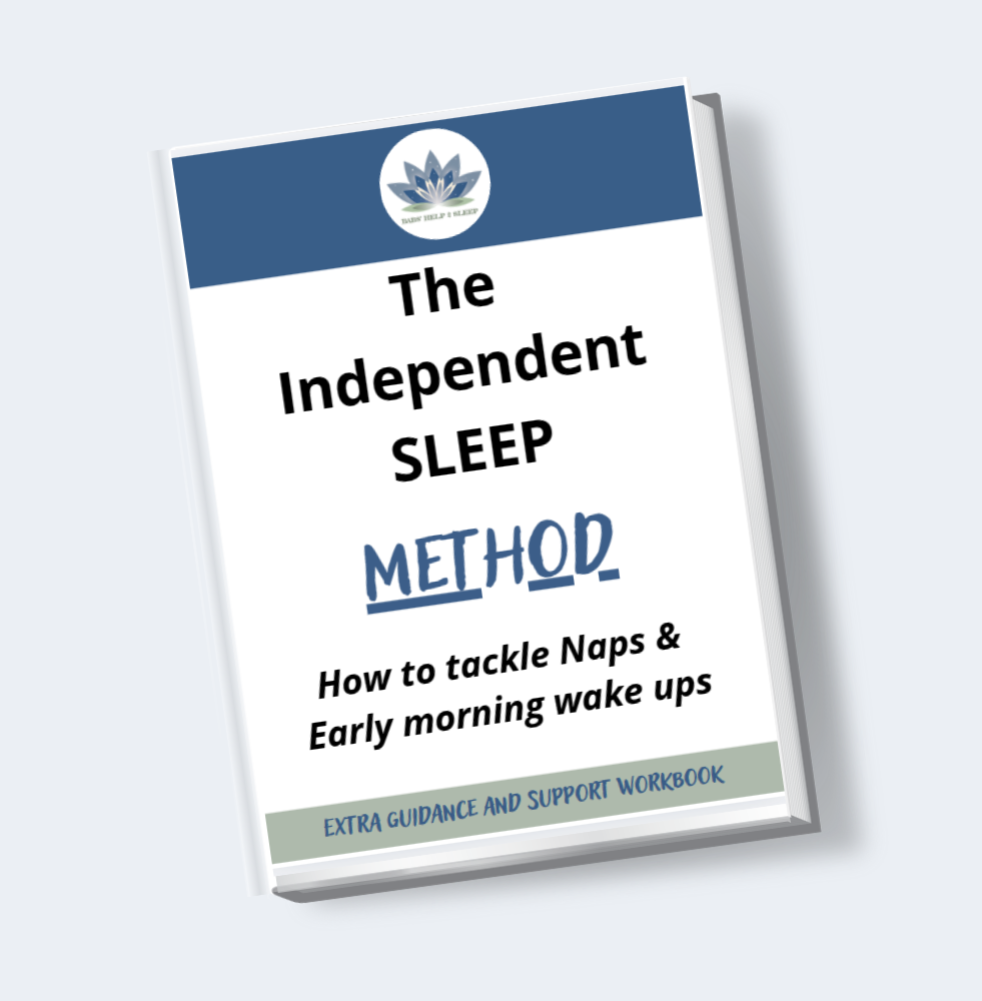
Your companion workbook
- No more guessing if she’s tired or overtired. The cues guide and stages of fatigue show you exactly what to look for, so you catch the right window.
- No more random nap times. You find her age, build her ideal schedule, and write her nap routine, so the day has a shape before it starts.
- No more wondering if it’s working. The nap log tracks every nap, even the rough ones, so you can see the progress on a day you’re too tired to feel it.
- The Sleep Puzzle on the last page shows you how every piece fits together once it clicks.
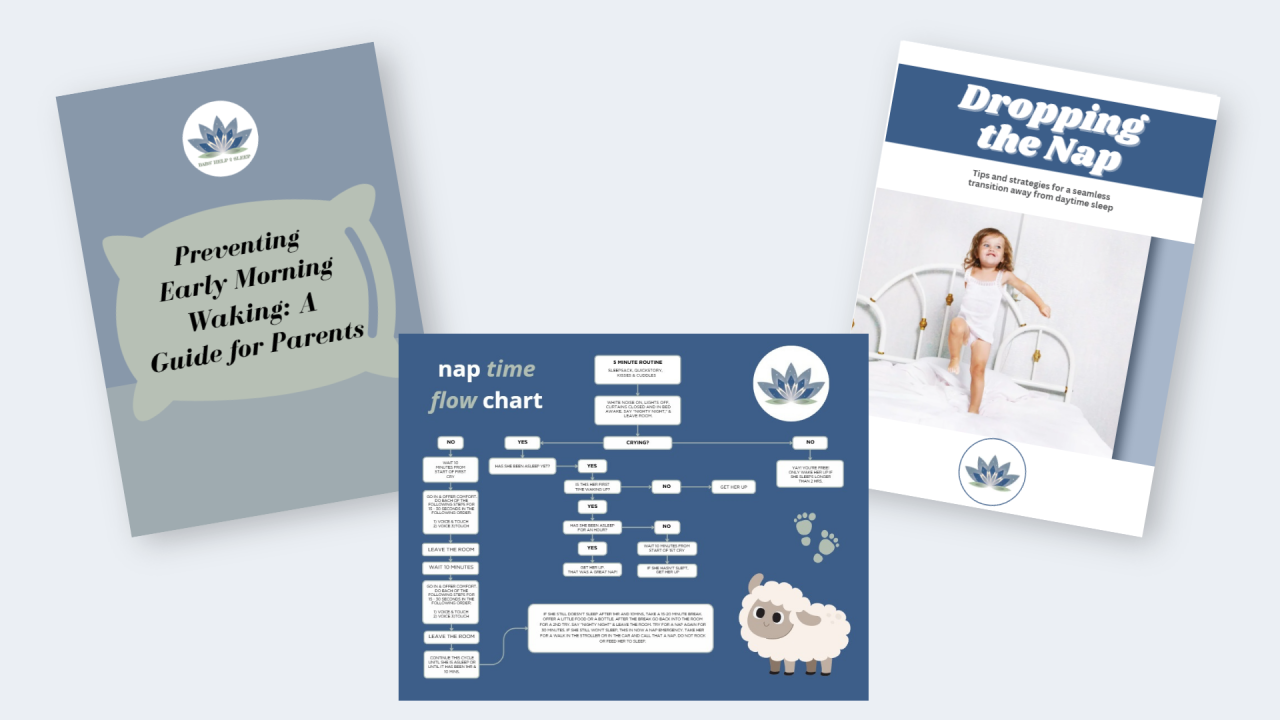
Three bonuses. Each one removes a specific wall.
These aren’t extras. Each one exists because there’s a specific moment in the day where moms get stuck.
Bonus 1: Nap Time Flow Chart
A one-page printable you keep beside you during every nap. It tells you exactly what to do at each step: how long to wait, how to go in and offer comfort, the 45-minute try, the reset, the second try, and when to call it and rescue the nap. No freezing, no guessing in the moment. You follow the chart
Bonus 2: Preventing Early Morning Wake Ups Guide
A step-by-step guide for the wake-up that comes before the day should start. It walks you through giving it time, fixing the room, the daytime schedule change most moms miss, why a too-early first nap reinforces the early waking, and a last-resort method for when nothing else has worked. Early mornings are almost always solvable once you work the steps in order.
Bonus 3: Extra Toddler Guidance
For when the nap transition is coming or already here. The real signs of readiness, how to set up quiet time so you both still get the break, the activities that work, and how to shift bedtime so dropping the nap doesn’t bring back overtiredness and early waking. So you know whether to hold the nap or let it go, instead of guessing.
About Babs.

Hi, I’m Babs, a Certified Pediatric Sleep Consultant based in Dubai. I’ve been helping families with sleep for 7 years, across hundreds of families worldwide.
A lot of moms come to this after The Independent Sleep Method, once their little one is finally sleeping through and the days are the last thing standing in the way. If that’s you, you already know how I work. This is the same method, pointed at naps and early mornings.
I built it because daytime sleep needs its own plan. The cues are different, the timing matters more, and a short nap needs a different response than a night waking. I’ve refined all of it in real homes with real families until every situation was covered. You’re getting the same plan I use with my 1-on-1 clients.
What moms say.
“I was so nap trapped. He was glued to me all day. Now he naps in his cot, plays on his own a bit, and I have time to do things around the house or just sit down for a minute. Honestly I didn’t expect it to change this much in only two weeks.”
Boy 10 months
“My whole day was about naps. Sitting in a dark room forever trying to get her to sleep, then 40 minutes later she was awake again. Now we have one long nap and she’s finally waking up around 7am. I’m a completely different person.”
Girl 7 months
A few things you might be wondering.
My nights are good. Do I actually need this?
If nights are sorted but naps are still short, inconsistent, or only happen in the car or on you, yes. Daytime sleep runs on different rules and needs its own plan. Good nights are the foundation. This is the next piece built on top of them.
My nights aren’t settled yet. Should I start here?
Start with The Independent Sleep Method first. Naps fall into place much faster once nights are solid, and trying to fix both at once makes both harder. Get the nights right, then come back for this.
Aren’t naps just harder than nights anyway?
They are, and I won’t pretend otherwise. Lower sleep pressure, shorter cycles, and daylight all make daytime sleep harder to learn. That’s exactly why naps need their own method and their own timing, instead of just hoping the night plan carries over. The part in your favour: your little one already owns the skill from nights, so this is a relearn, not a restart, and a relearn is faster.
I rely on contact naps and car naps to survive. What happens to those?
The method replaces them with naps in the cot, the same way bedtime stopped relying on rocking or feeding. The flow chart even tells you when to rescue a nap with a stroller or car ride on a hard day, so you’re never stuck with nothing. The goal is that you need those less and less.
I’ve got a newborn or a toddler in the mix too. Is that going to make this impossible?
No. Plenty of moms doing this have a second little one around. The set schedule and the nap routine are built to bring order to the day exactly when there’s a lot going on, so you’re working from a plan instead of winging every nap.
I don’t have time for another course right now.
You won’t need much. Three short videos you can watch during a nap, and a fill-in workbook you do once and keep beside you. No hours of material to get through. You go straight to what fixes the day and start the same afternoon.
I won’t do cry-it-out.
You won’t have to. You guide her and comfort her through it, and you never leave her to cry alone. Sometimes you’re settling her right there, sometimes you step out for a few minutes and come back in to comfort her. You’re always responding, the same as you did at night.
Naps first. Then early mornings.
Naps and early morning wakes are connected. When naps settle, early mornings very often resolve on their own. If they don’t, video three is the dedicated fix.
So we do naps first, then early mornings if they’re still hanging on. One step at a time, the same way you got the nights.
Independent Naps & Early Mornings
The same method, pointed at the day. You guide her, and you never leave her to cry it out. One promise. One result. You stay in the room.
3 video modules + companion workbook + 3 bonuses
You already taught your little one to sleep at night. This is how you teach her to nap.
You don’t need another wake-window tweak or one more thing to try. You need the daytime version of the plan that already worked, and the timing that makes it hold.
Predictable naps. A day you can plan around. Early mornings sorted. And you got there the same way you got the nights, without ever leaving her to cry it out. That’s what this is.